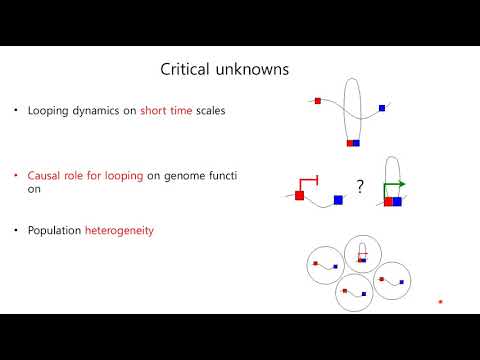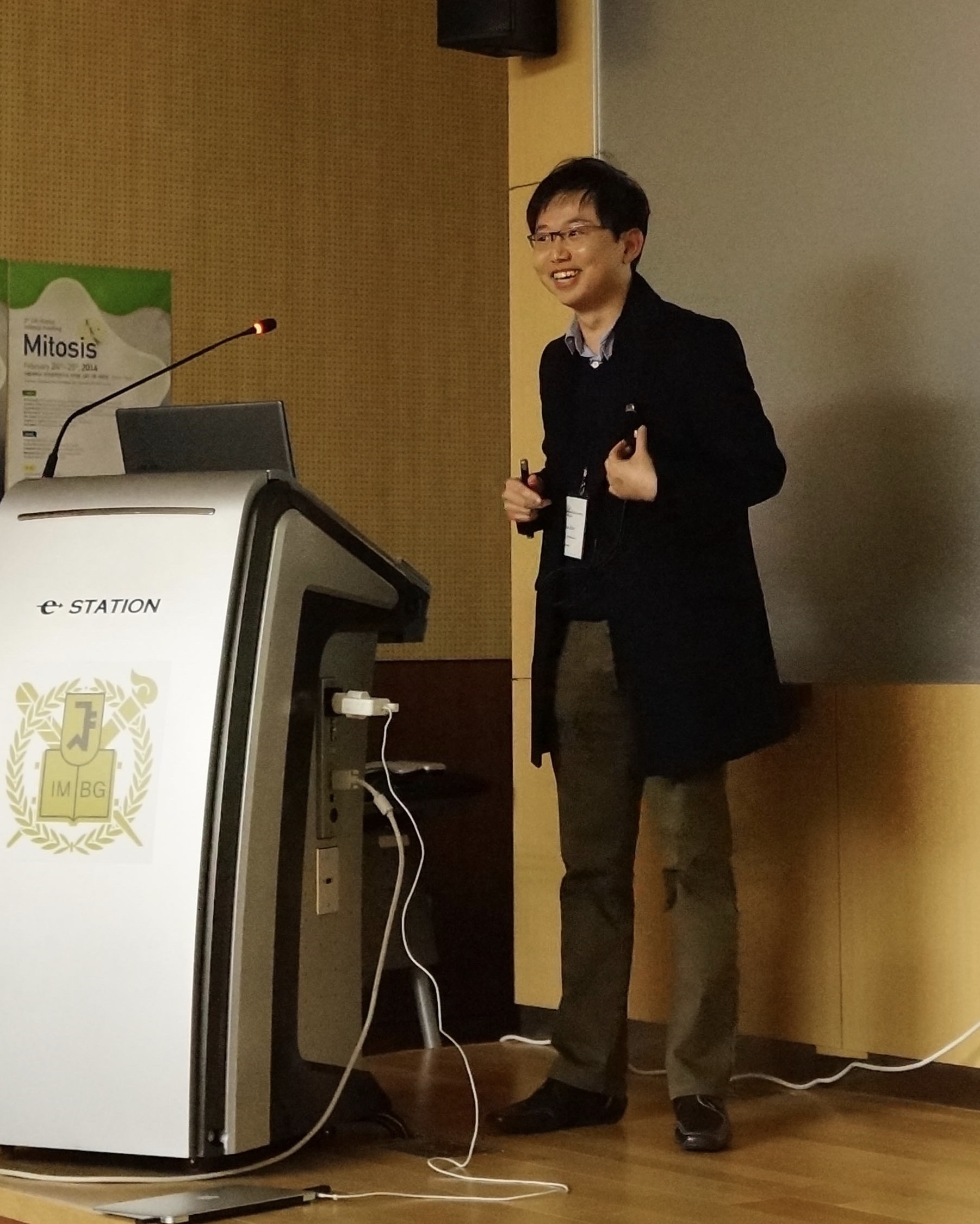
Ji Hun Kim studies how the three-dimensional folding of the genome controls gene expression, cell identity, and disease. His work spans the wet lab and the computer — building the molecular tools that read and reshape genome architecture, and the analysis that makes sense of it.
His path has crossed four countries. He earned his Ph.D. in chromosome biology at the University of Melbourne — supervised by Damien Hudson, Paul Kalitsis, and Andy Choo — during which he spent time as a visiting scientist in the Edinburgh laboratory of Bill Earnshaw, a world leader in cell biology and chromosome structure. He went on to train as a postdoc in the United States: first with Charles Lee at the Jackson Laboratory, a leading figure in genomics whose work on structural and copy-number variation reshaped the field, and then in Jennifer Phillips-Cremins' lab at the University of Pennsylvania, a leading group in 3D genome folding. Before returning to academia he worked as an Investigator at GlaxoSmithKline, seeing how fundamental discovery connects to medicine.
In 2022 he opened the Kim Lab at KAIST, where he and his students are working out the rules of genome folding — and what happens when those rules break in disease.
You won't be a pair of hands on someone else's project. You'll take ownership of a genuine scientific question and see it through.
Come in from the bench or the keyboard and leave fluent in both — the rare, durable combination that 3D-genome science demands.
The methods and standards built across Melbourne, Edinburgh, the Jackson Laboratory, Penn, and GSK — passed directly to you.
We welcome students from biology, medicine, bioengineering, and computer science. No prior 3D-genome experience needed — curiosity and persistence matter more.
See open positions →